
For the technology team
The foundation where every module is built.
Every module reuses connections, definitions and controls already built. That foundation reduces repeated work; each module's cost depends on its scope and integrations.
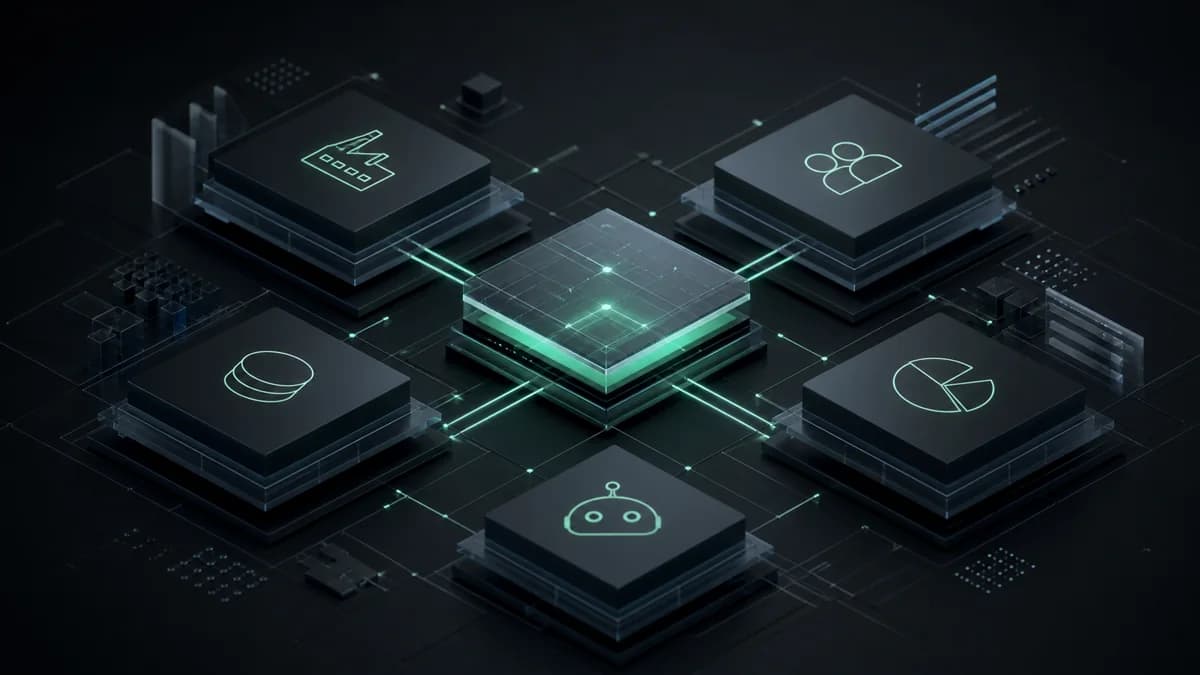
Four pieces, one foundation
Connect
Connectors
Integration with ERP, CRM, banks, tax authority, payroll and BI through MCP, REST, GraphQL, SQL, events or webhooks. Read and write scope is confirmed per deployment.
Define
Shared business definitions
Every KPI and rule is defined once and exposed to dashboards, applications and agents. Every figure can be traced to its SQL and source row.
Run
Agents and workflows
AI agents combined with deterministic steps. Tools, data and limits scoped by role before anything runs.
Control
Identity, approvals and records
SSO via SAML 2.0 or OIDC, role-based access and human approval before writing to your systems or running high-impact actions. Approvers are defined per deployment, with a record of calls, approvals and outcomes.
Connects to what you already use
Systems common in Chilean and Latin American companies.
- OdooERP
- SAP Business OneERP
- SAP S/4HANAERP
- SAP HANADatabase
- NetSuiteERP
- SIITax documents
- BukPayroll
- Bank statementsBanking
- HubSpotCRM
- SalesforceCRM
- Power BIBI
- PostgreSQLDatabase
Reference integrations. The exact adapter and its permissions are confirmed during implementation.
See all integrationsHow it runs in your environment
Xophia managed cloud
Logical isolation per organization, TLS 1.2+ in transit and AES-256 at rest. Region, retention and integration identities documented for the deployment.
Customer VPC
Inside your cloud account, by scope. Network paths, data flows and control responsibilities are agreed before deployment.
Questions from a first technical evaluation
How does Xophia connect to my existing systems?
Through MCP-compatible tools and APIs such as REST, GraphQL and SQL. The exact adapter, permissions and write scope are confirmed during implementation.
Does Xophia replace my CRM, ERP or BI tool?
Only the ones that don't deliver the value your business needs, and that call is yours. Systems that work stay and are connected. A tool that creates friction is replaced by a module built in Xophia on your rules, one module at a time, once the numbers support it. Its data is migrated and validated before anything is retired.
Can we start with a single process?
Yes. A deployment starts with one bounded process, defined systems and explicit controls, then expands after technical and business validation.
How are high-impact actions controlled?
Tool and data access is scoped by role. Writes to your systems and high-impact actions require human approval; approvers and limits are agreed per deployment. Available evidence depends on the configured connector.
Where is data stored and processed?
In our managed cloud or in the customer's VPC, depending on scope. Region, data flows, retention and backups are confirmed and documented before deployment.
What happens to our data if we stop using Xophia?
You retain all rights to the data and instructions you submit, and the systems you connected remain your system of record. Termination rights, export windows and deletion timelines are defined in the applicable customer agreement and documented deployment plan.
Let's see it on your systems.
Bring one process. We map its systems, decisions and controls, and propose a concrete first module.